For this exercise, I chose to work with excerpts from Big Sur by Jack Kerouac, a book I am currently reading. I thought it would be interesting to explore how different passages might interact with the environments in which they were recorded. I tried to be intentional about selecting excerpts that felt particularly appropriate to each setting, considering the relationship between the subject matter of the writing and the surrounding soundscape.
For all the recordings, I used my iPhone and they were saved as MP3 files, with a bit depth of 16-bit and a sample rate of 44.1 kHz.
Quiet environment: silent room – I felt that the passage I selected was particularly suited to a quieter environment, as its reflective and introspective quality seemed to complement the relative solitude of the space. Big Sur follows Kerouac’s experiences in the coastal redwoods of California, exploring themes of isolation, reflection, and the relationship between the individual and their surroundings. I found it interesting to consider how the atmosphere of the text might translate into a completely different physical environment. Despite the relative quiet of my bedroom, the low, continuous drone of the city streets outside remained subtly audible. In some ways, this provided an interesting contrast to the natural landscape described in the book, particularly the coastal winds and remoteness associated with Big Sur.
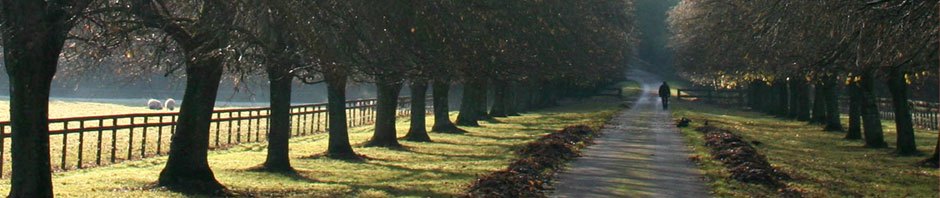
Moderate environment: local park – For the moderate recording, I chose to record in a local park, selecting a passage in which the protagonist is outside, describing his surroundings. My intention was to find an environment that might loosely replicate the atmosphere of a coastal forest, with the lighter, more open ambient sounds typically associated with nature. However, despite being surrounded by greenery, the recording predominantly captured the distant, continuous drone of the city. This was an interesting outcome, as it highlighted the difficulty of isolating natural sounds within an urban environment. Even in a relatively quiet patch of green space, the surrounding city remains sonically present. In retrospect, I think I approached this recording somewhat literally, assuming that finding a green outdoor space would produce the kind of atmosphere I was trying to capture. Instead, the recording revealed how difficult it can be to separate an environment from the wider soundscape surrounding it.
Loud environment: For the loudest recording, I chose an excerpt describing the howling winds of Raton Canyon in Big Sur. To create a louder sonic environment, I recorded with the kitchen extractor fan switched on at its maximum setting. I thought this would be an interesting way to introduce a continuous, relatively dense sound into the recording, loosely resembling the intensity and consistency of howling wind. Although the mechanical drone of the extractor fan is obviously quite different from the natural elements Kerouac describes, It was a successful experiment in how the passage would interact with this sound and whether the surrounding noise would alter the atmosphere or intelligibility of the spoken text. This also raised questions relating to the contrast between the natural landscape being described and the domestic and mechanical consistent drone of the vent in which the recording took place.
I found that the process required a considerable amount of patience. Rather than being able to construct a soundscape exactly as I had imagined, I had to spend time listening to the environment and considering what was actually present. This was quite different from my existing practice, where I am often quite particular about constructing environments within a DAW, layering and processing sounds to achieve a specific atmosphere. Field recording introduced a degree of unpredictability, as the environment did not necessarily produce the atmosphere I anticipated. The attempt to find a forest-like atmosphere in a small patch of greenery, only to find the persistent drone of the surrounding city, was a good example of this. Moving forward, I would be interested in revisiting this exercise and experimenting with capturing more dynamic industrial soundscapes. Rather than approaching an environment through the sounds I expect to find there, I would like to explore its less immediately obvious sonic characteristics and consider how these might contribute to a composition. Although I am not yet certain whether these recordings will feature in my final project, I found the exercise valuable in broadening my understanding of how spoken word can be used within a wider sonic context.